BACK

BACK
BACK
BACK
BACK
BACK
BACK
BACK
BACK
BACK
Upcoming Lakeland Lecture to Center on Indian Migration
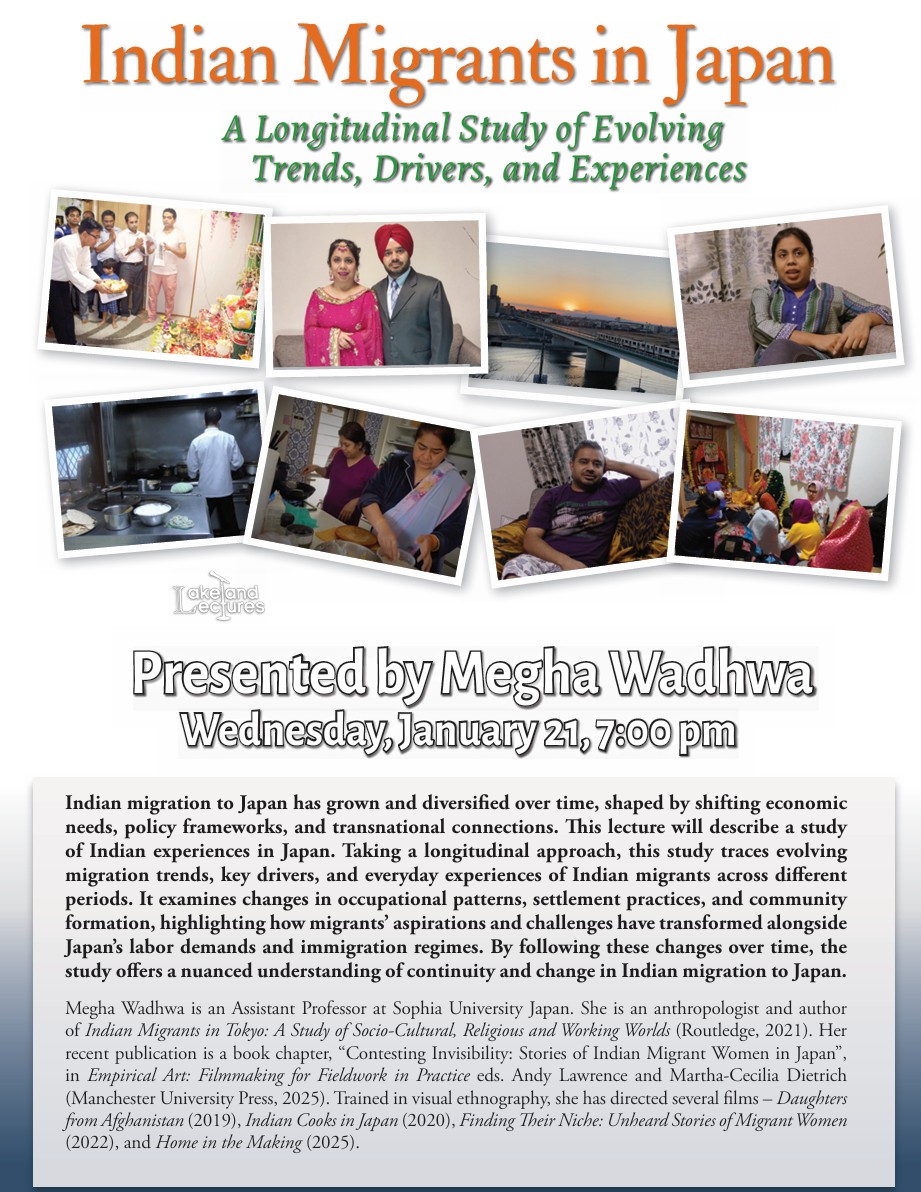
On Wednesday, January 21, at 7pm here at Muskie Hall, anthropologist Megha Wadhwa will be delivering this month's Lakeland Lecture.
The title of her talk, which includes a chance for Q and A, is "Indian Migrants in Japan: A Longitudinal Study of Evolving Trends, Drivers, and Experiences." More information can be found in the poster below.
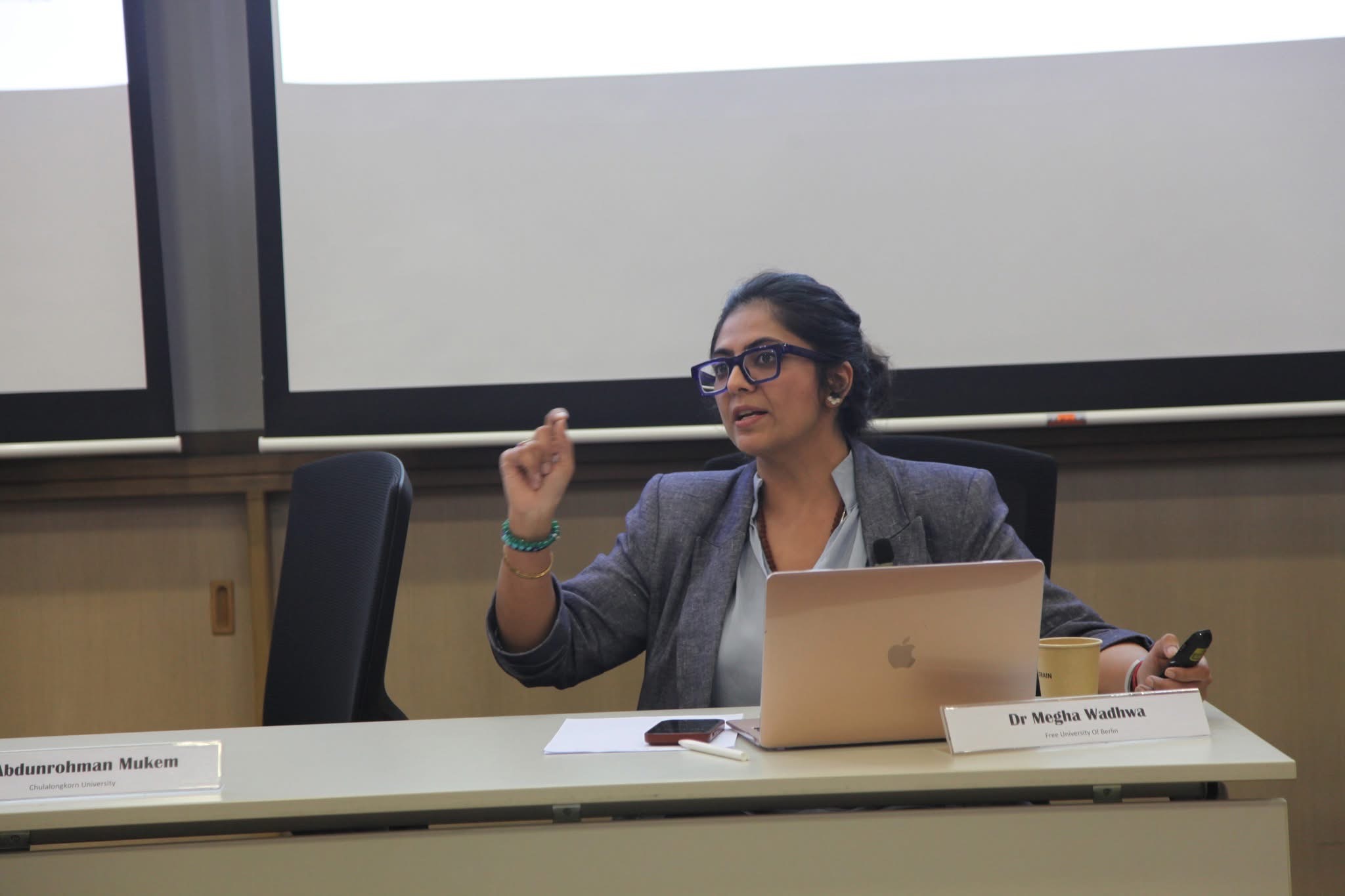
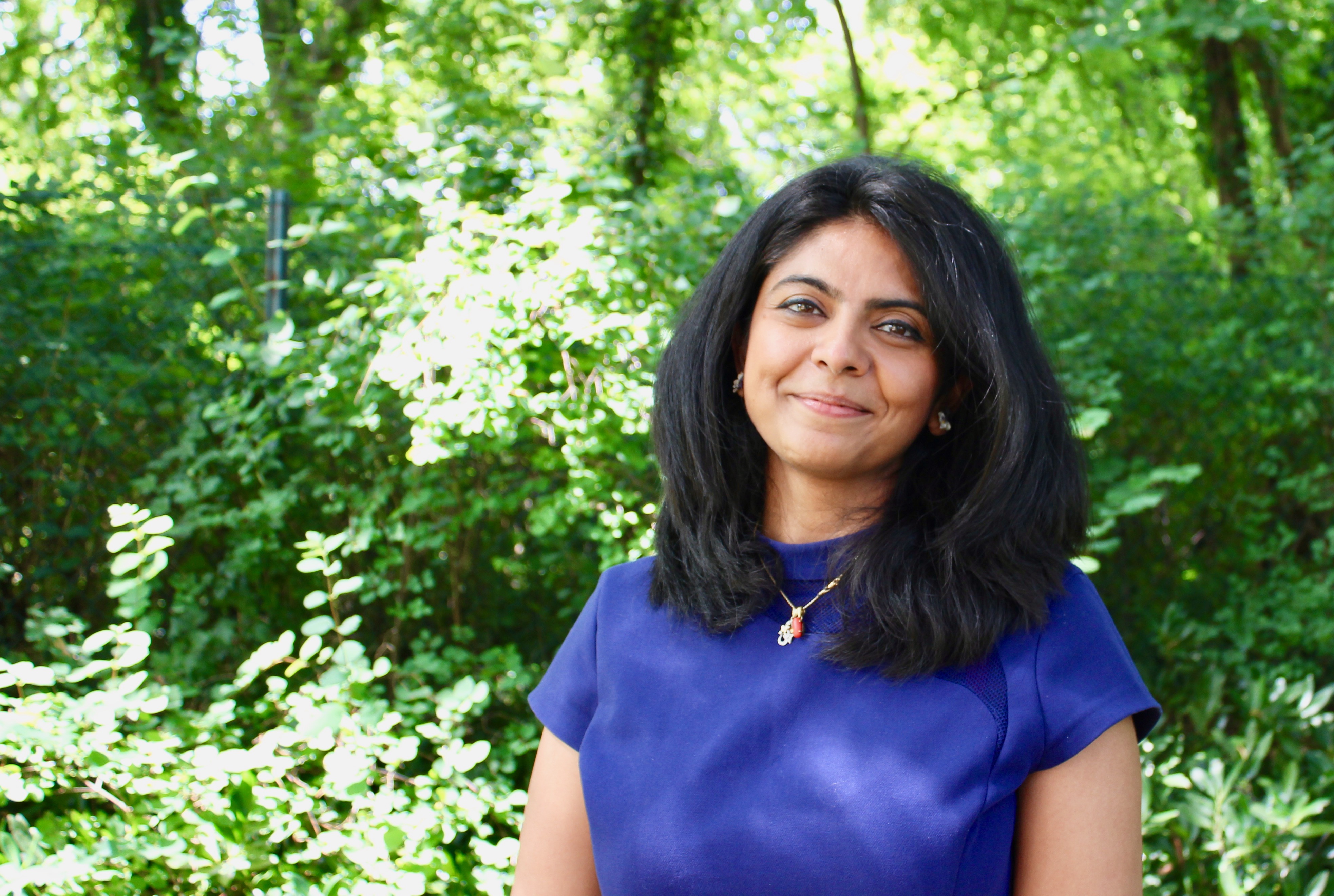
Dr. Megha Wadhwa is an Assistant Professor at Sophia University and welcomes questions about her work for those who attend. Her book, Indian Migrants in Tokyo: A Study of Socio-Cultural, Religious, and Working Worlds, was published by Routledge in 2021.
We had a chance to ask Dr. Wadhwa three questions before her talk.
Her answers appear below.
The appeal of Japan for Indian migrants has always been layered, and that complexity has only deepened over the past 15 years. There are those who come with a genuine interest in Japan itself—people who are learning the language, who admire Japanese culture, or who feel drawn to the country’s social and aesthetic sensibilities. At the same time, there are others for whom Japan represents an opportunity abroad, a place where work, study, or long-term stability might be possible when options elsewhere feel limited.
What I have noticed more recently is a shift in how Japan is imagined. Increasingly, it is seen as a “dream destination,” even by those who may not have had direct exposure to the country. The digital world—through social media, popular culture, and curated narratives—plays a significant role in creating this desirable image. Whether Japan ultimately turns out to be that dream varies greatly from person to person, but the aspiration itself has certainly become more widespread.
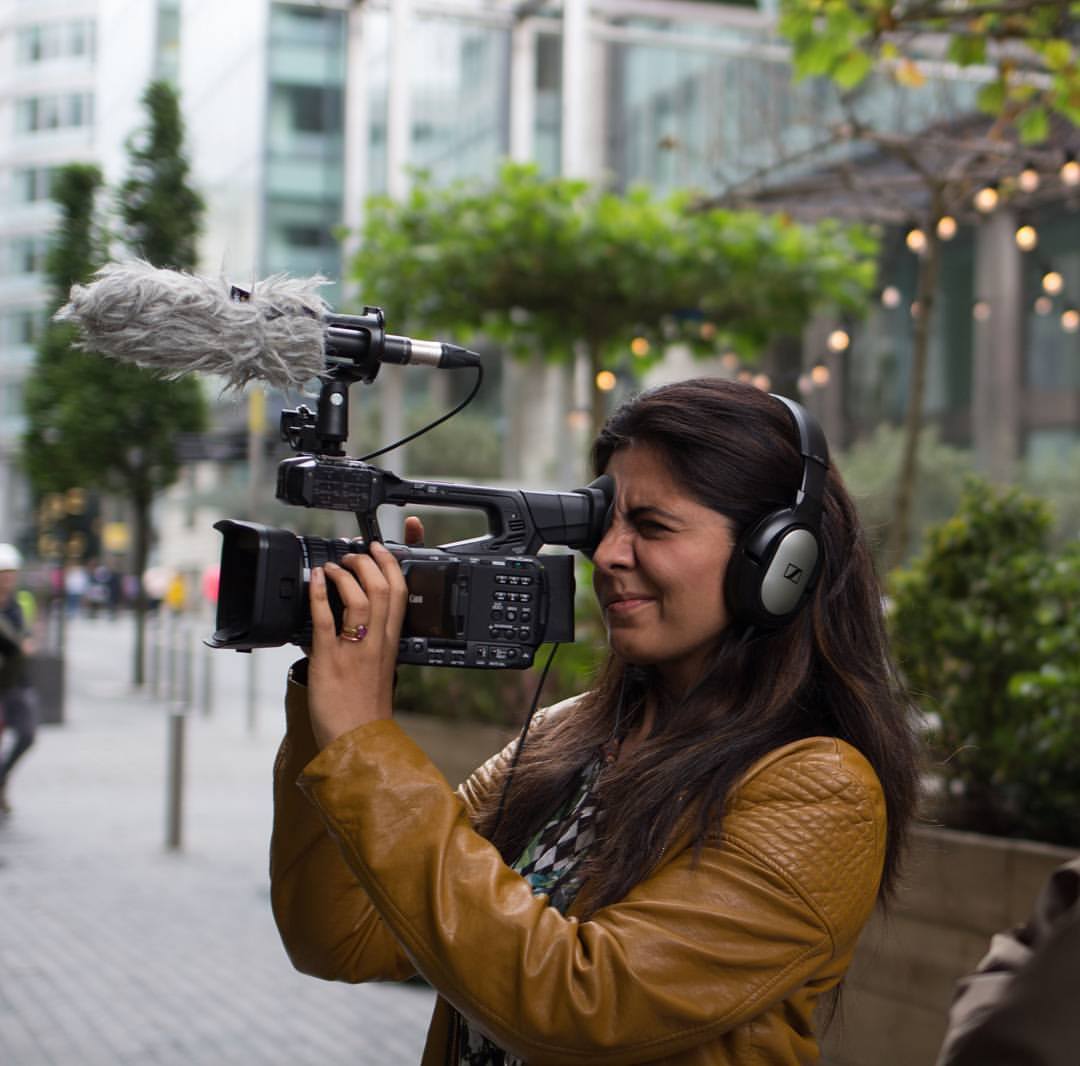
Interviewing is central to my work because, at heart, I am an anthropologist. Listening carefully to people’s stories—how they make sense of their lives, their movements, and their choices—is fundamental to how I understand migration and society. Interviews are not just about extracting information; they are about building trust, capturing nuance, and allowing individuals to speak in their own terms. Through these conversations, broader social patterns emerge, but they always remain grounded in lived experience.
In documentary work, this process becomes even more vital, as these voices and encounters shape not only the narrative, but also the ethical responsibility of how stories are represented and shared.
In my early twenties, I was surrounded by challenges, both before coming to Japan and after arriving, while always remaining aware that others were often in far more difficult circumstances than my own. What sustained me was an inner drive. I did not have a clear roadmap at that stage of my life, and I certainly did not imagine that I would end up in Japan or in academia.
My path unfolded gradually, through small decisions rather than grand plans. That period taught me that uncertainty is not a weakness, but a necessary space for growth, one that also carries a responsibility to remain grounded and attentive to the wider social realities around us.
Follow LUJ on Instagram